


The maritime industry is undergoing a structural transformation driven by digitalization, rising operational costs, and increasingly strict international regulations. In this environment, data analytics has become a critical component of modern ship management, enabling companies to operate more efficiently, safely, and sustainably.
Rather than serving as a simple reporting tool, data analytics now plays a central role in decision-making across technical, operational, and commercial functions.
Improving Operational Efficiency Through Data Analytics
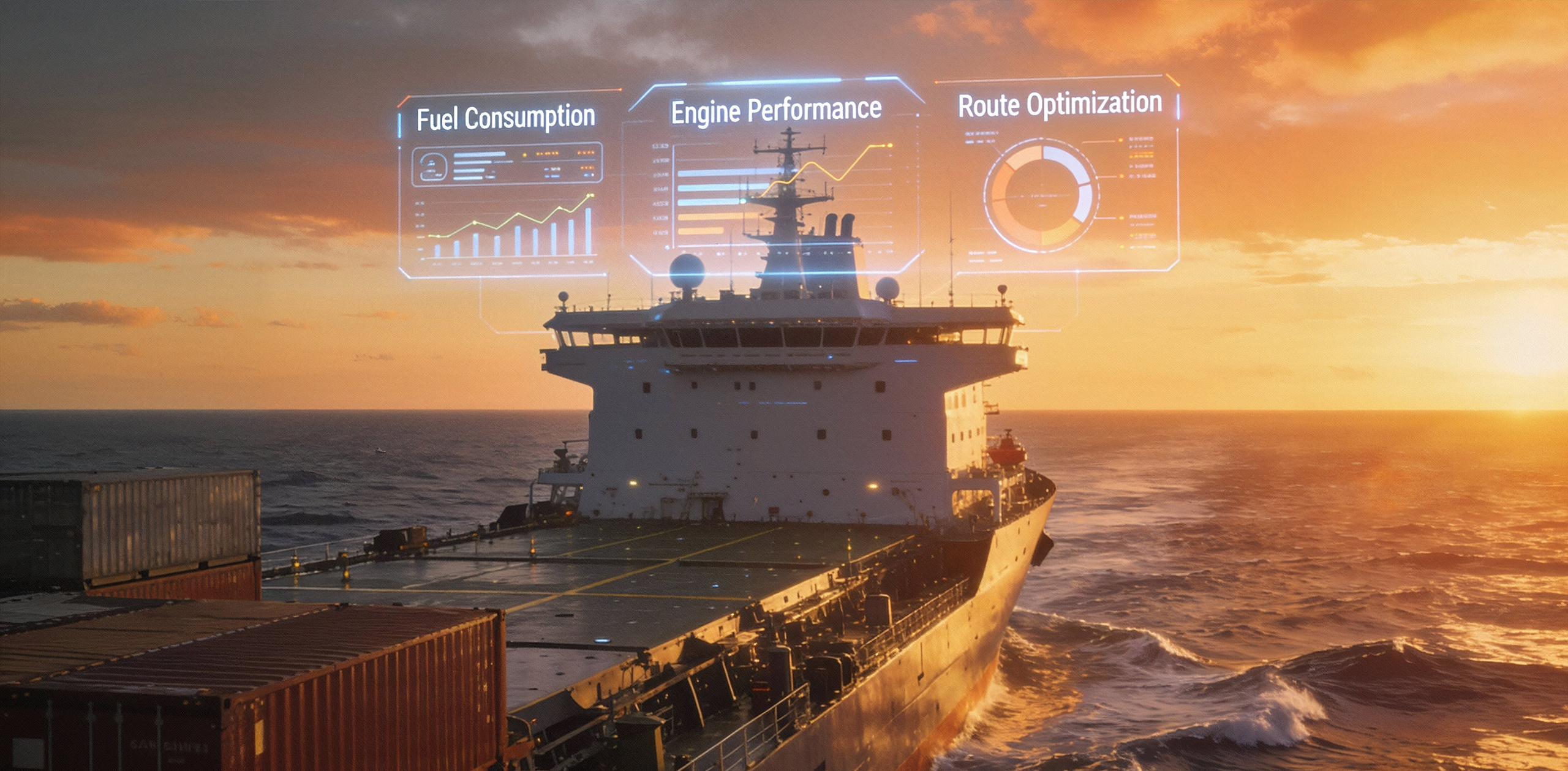
Modern vessels generate large volumes of operational data, including speed, route performance, fuel consumption, and engine metrics. When properly analyzed, this data provides clear visibility into daily operations.
Data-driven insights help operators:
-
Identify inefficiencies in routes and vessel speed,
-
Reduce unnecessary fuel consumption,
-
Compare vessel and fleet performance consistently.
As a result, companies gain better cost control while improving overall operational reliability.
Fuel Optimization and Emissions Compliance
Fuel costs represent one of the largest expenses in maritime operations. Data analytics enables continuous monitoring of fuel consumption at both vessel and fleet levels, allowing early detection of abnormal usage patterns.
This approach supports:
-
Compliance with IMO 2020, CII, and EEXI regulations,
-
Accurate emissions tracking and reporting,
-
Measurable progress toward sustainability targets.
By relying on verified data, shipping companies can demonstrate regulatory compliance with greater confidence.
Predictive Maintenance and Asset Reliability
Traditional maintenance strategies are often reactive or calendar-based. With data analytics, ship managers can move toward predictive maintenance, using real-time sensor data and historical maintenance records to anticipate failures before they occur.
Key benefits include:
-
Reduced unplanned downtime,
-
Lower maintenance and repair costs,
-
Extended equipment life cycles.
Predictive maintenance improves vessel availability while minimizing operational disruptions.
Enhancing Safety and Risk Management
Safety management systems generate valuable data through incident reports, near-miss records, and operational logs. Analyzing this information allows companies to identify recurring risk patterns and address them proactively.
Data-driven safety management:
-
Strengthens ISM and SMS compliance,
-
Reduces human-error-related incidents,
-
Supports a stronger safety culture across the fleet.
In high-risk maritime environments, informed risk management is essential.
Data-Driven Decision Making and Transparency
Real-time dashboards and performance reports bridge the gap between ship and shore. Decision-makers gain access to consistent, reliable information, enabling faster and more accurate responses to operational challenges.
This level of transparency allows management teams to:
-
Monitor fleet performance in real time,
-
Make informed commercial and operational decisions,
-
Align strategy with measurable performance indicators.
Competitive Advantage in a Digital Maritime Market
Shipping companies that effectively use data analytics gain a clear competitive advantage. Lower operating costs, improved compliance, and higher reliability directly impact charterer confidence and long-term business performance.
As digital ship management and fleet performance platforms continue to evolve, data remains the foundation of sustainable maritime operations.
Conclusion
Data analytics has become an essential capability in the maritime industry. From fuel optimization and maintenance planning to safety management and regulatory compliance, data-driven insights enable smarter decisions and stronger operational control.
In an increasingly competitive and regulated market, companies that invest in data analytics today will be better positioned to meet the challenges of tomorrow.